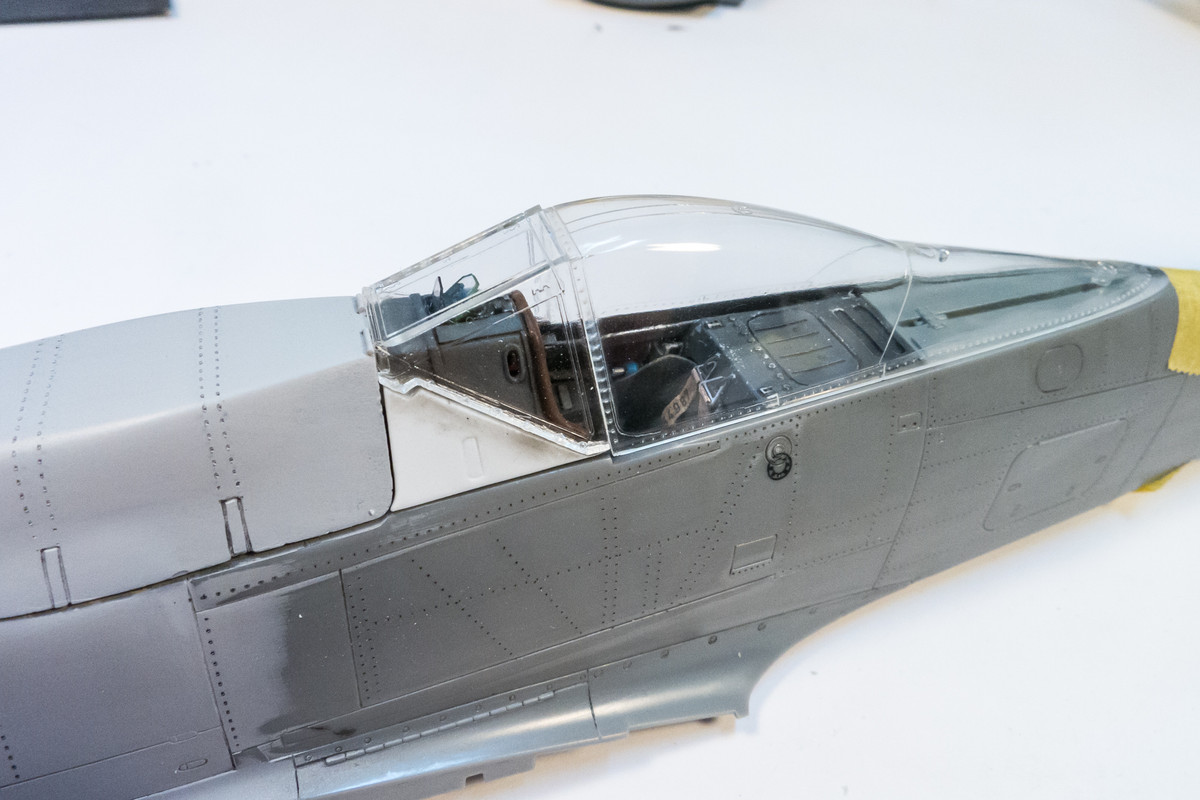
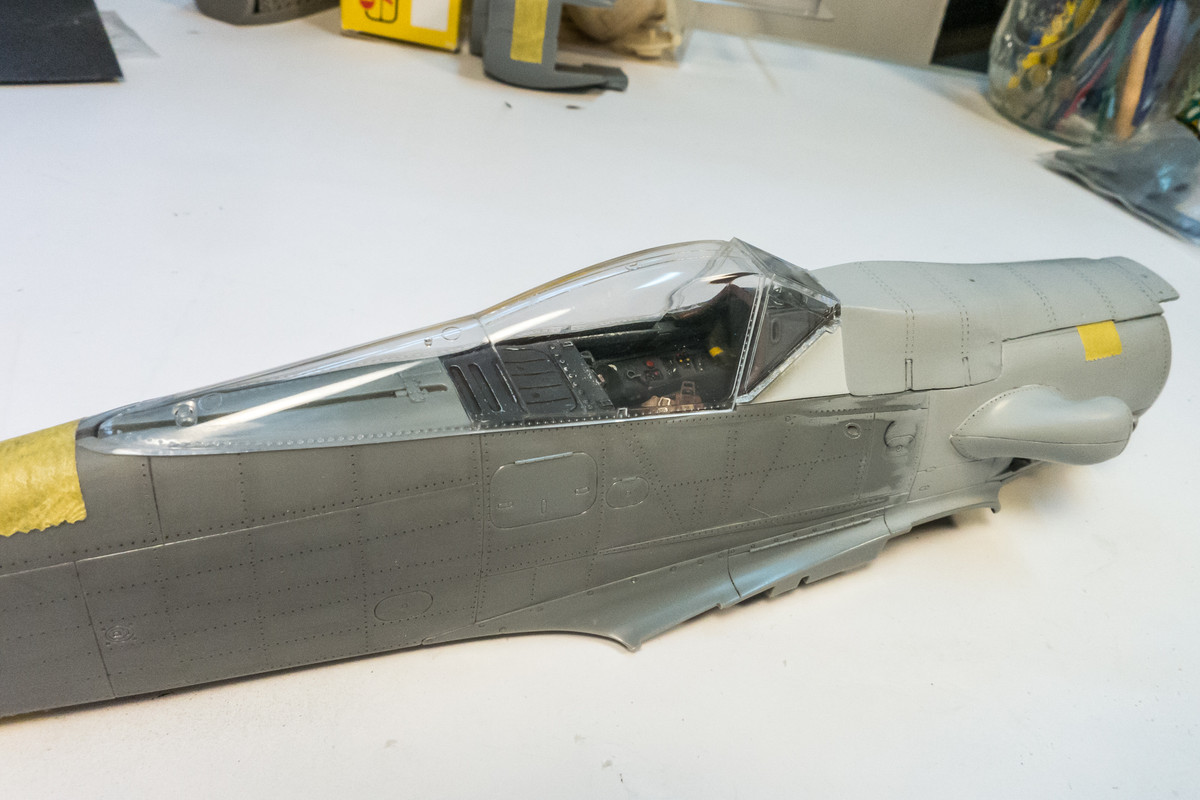
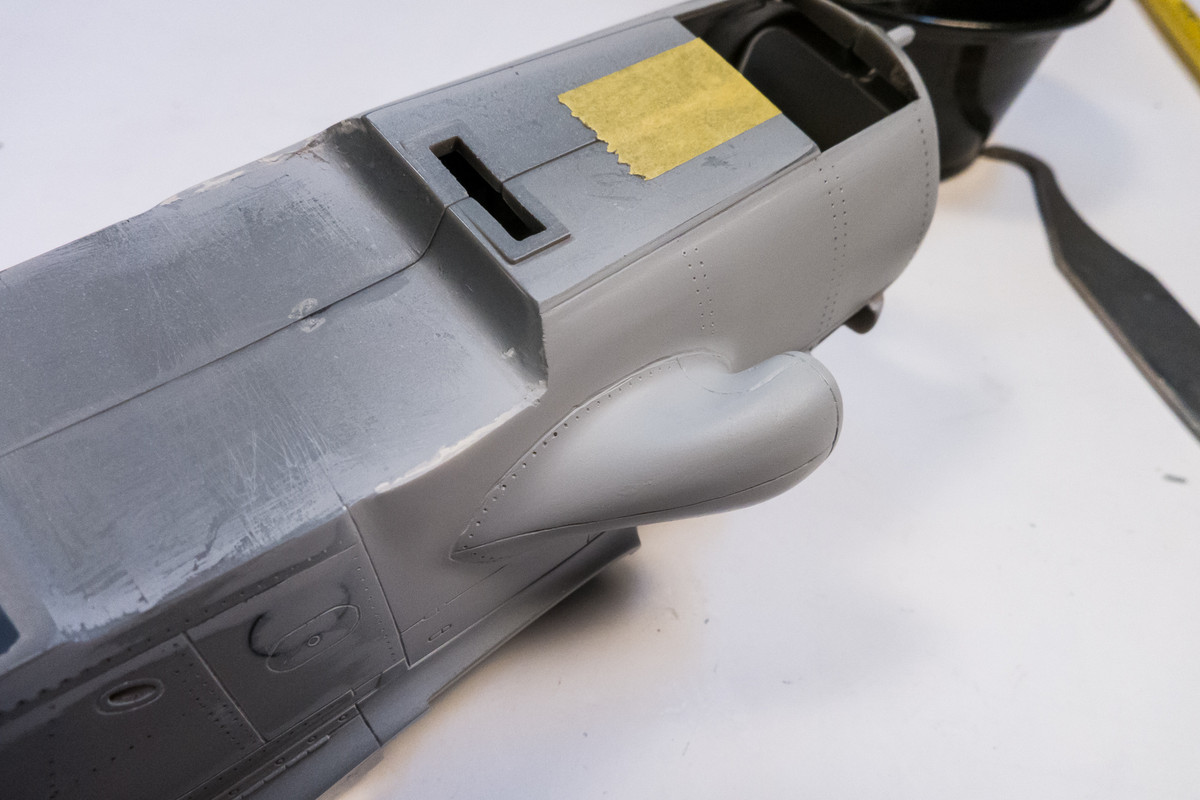
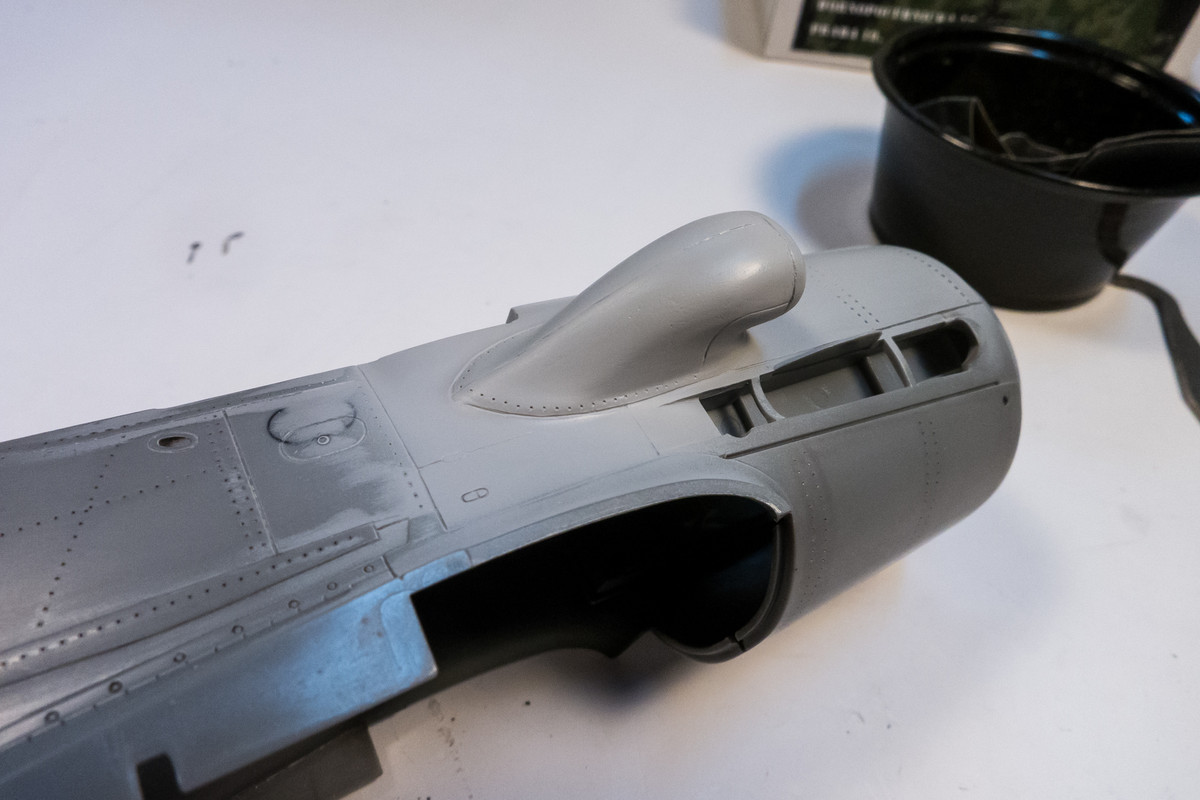
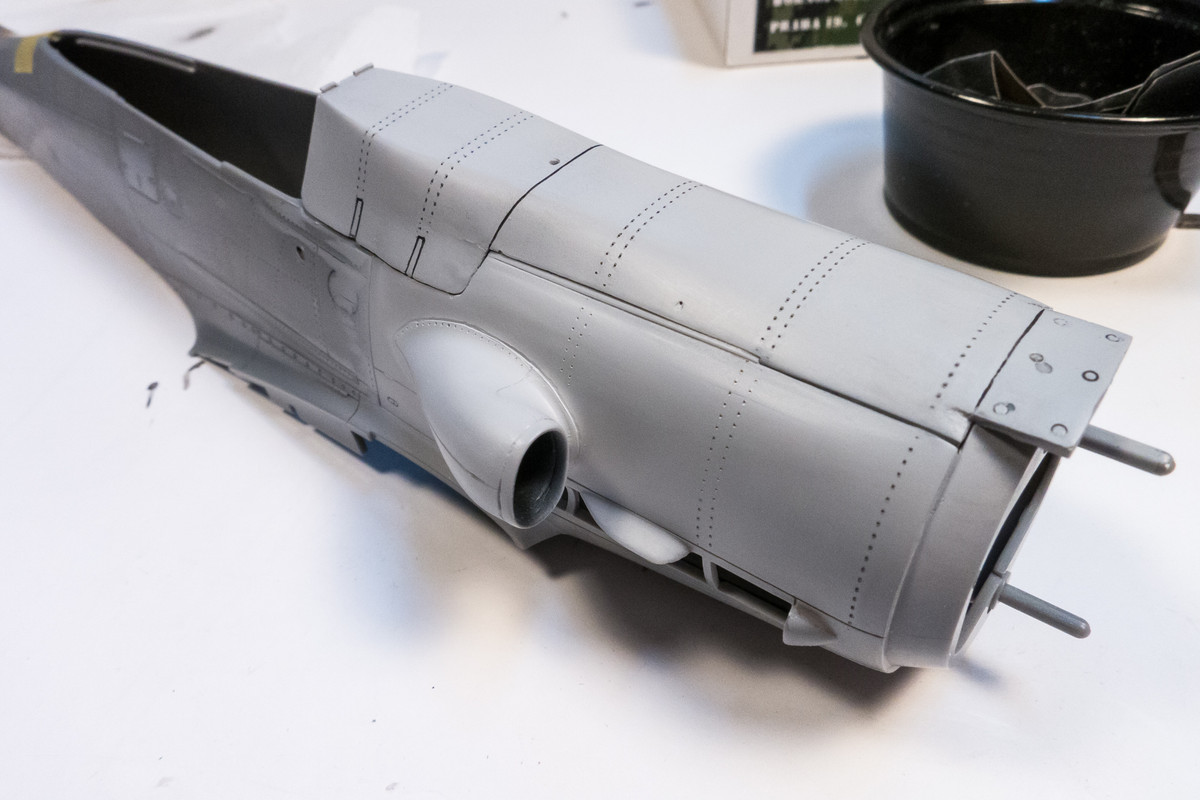
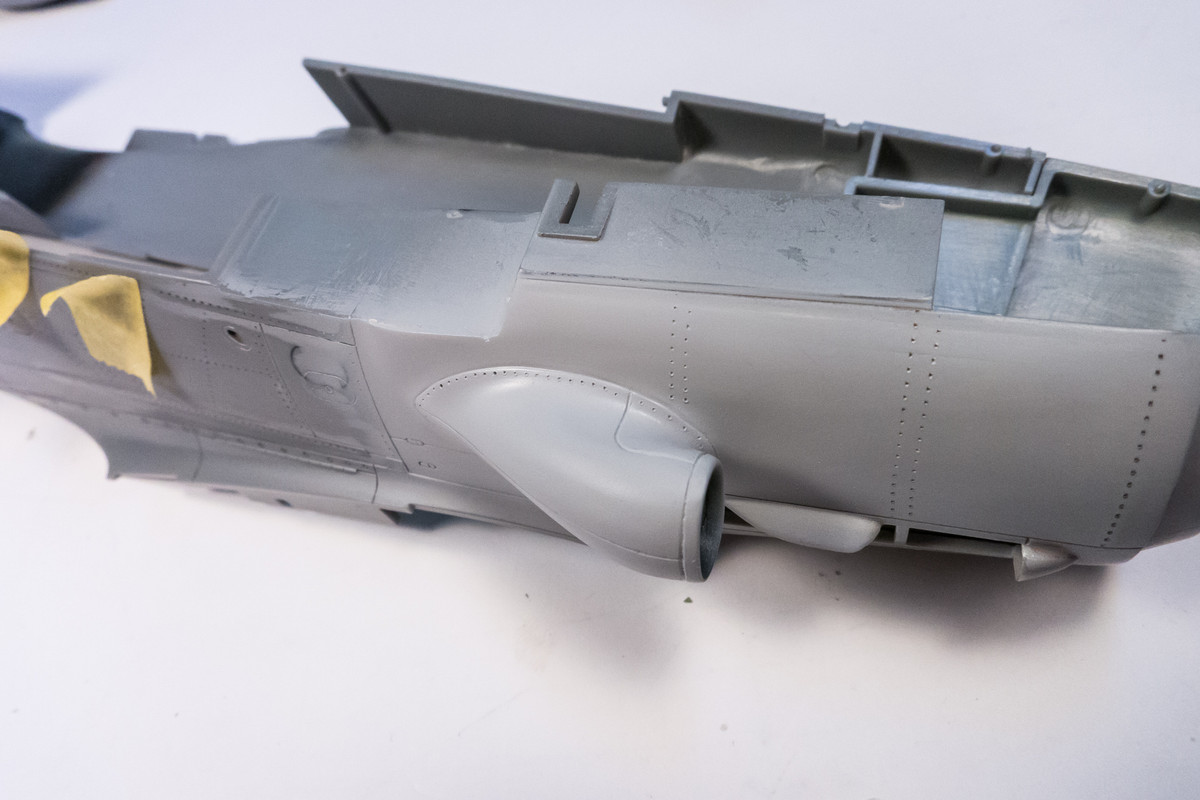
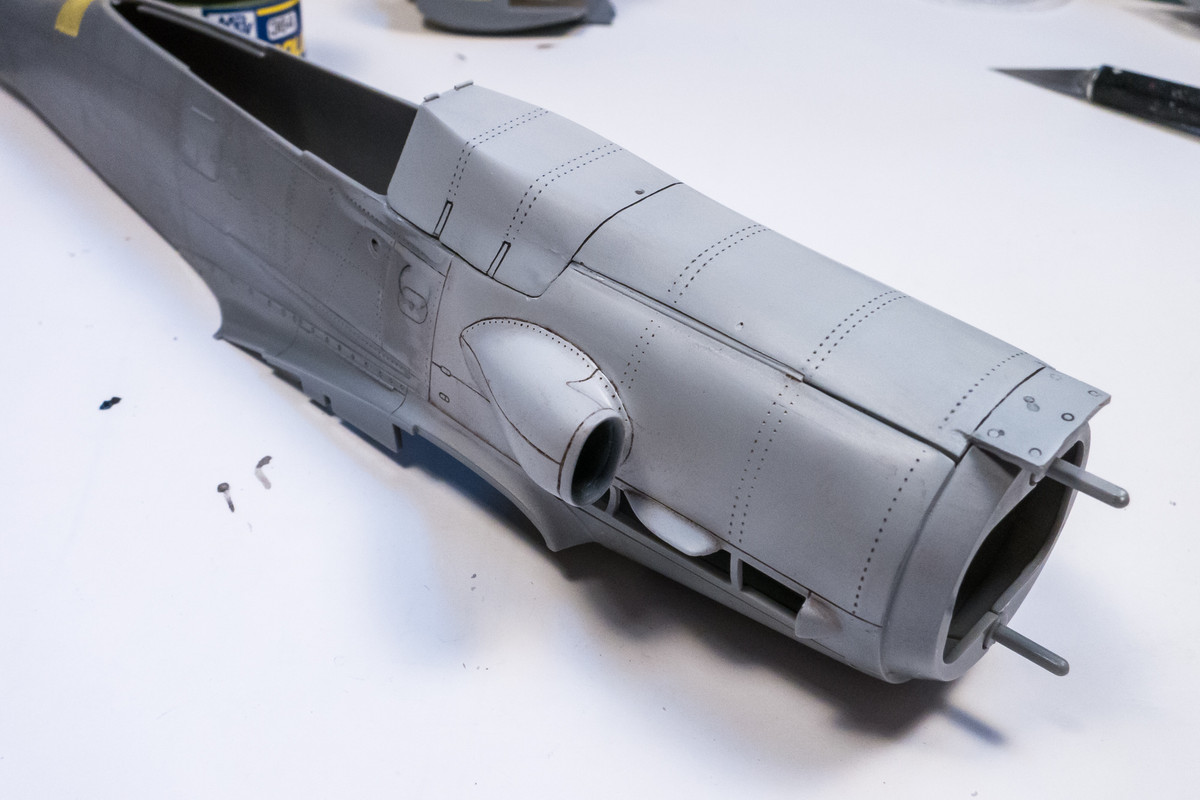
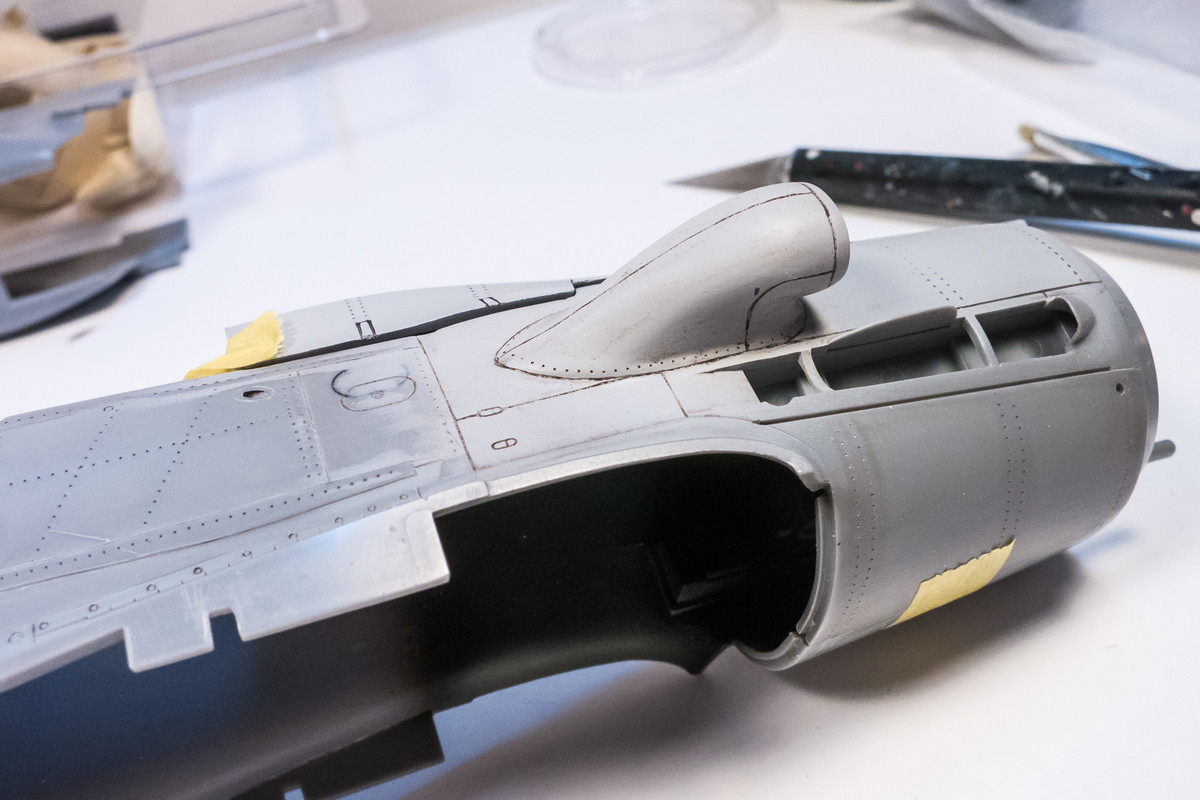
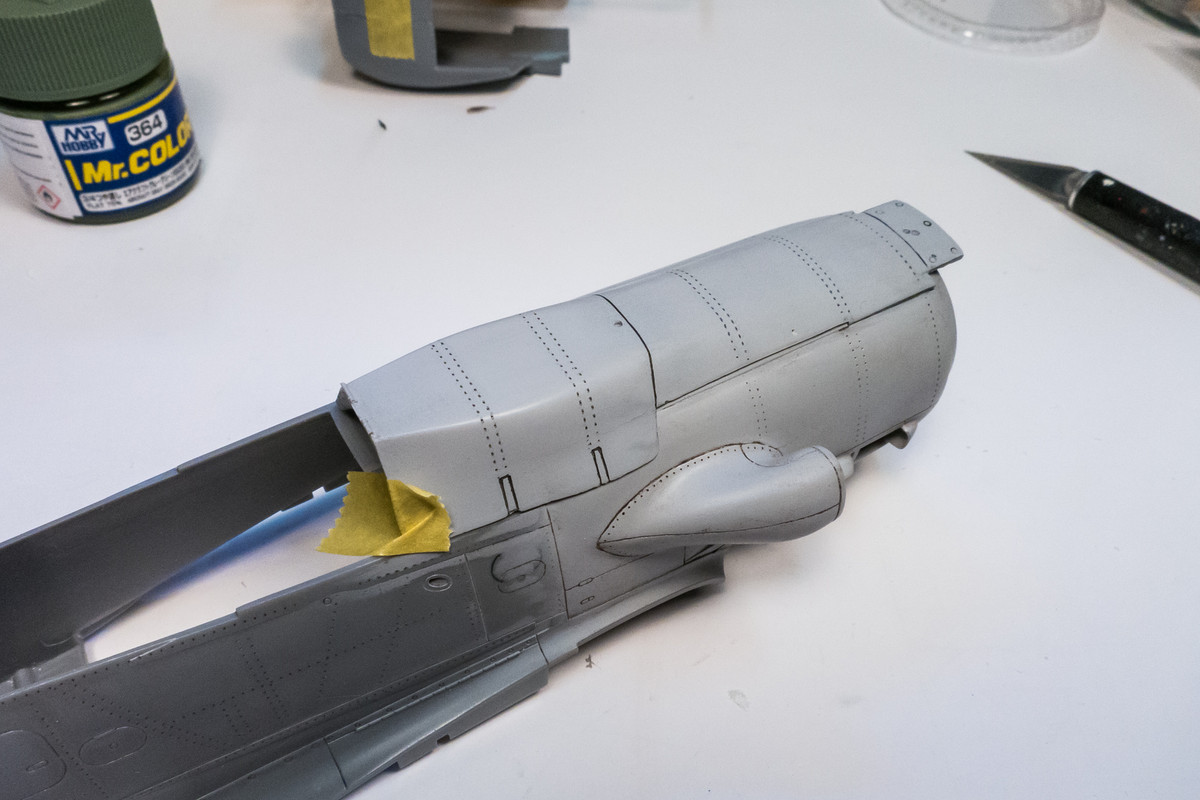
Before I went any further, I took the fuselage halves and scrubbed them in the kitchen sink with a soft toothbrush to remove as much of the sanding dust and pastel wash from the panel lines and rivets.
The Eagle Editions resin tail assembly has been painted. I previously drilled out holes to accommodate a brass tube axle so that I can mount the tail wheel later.
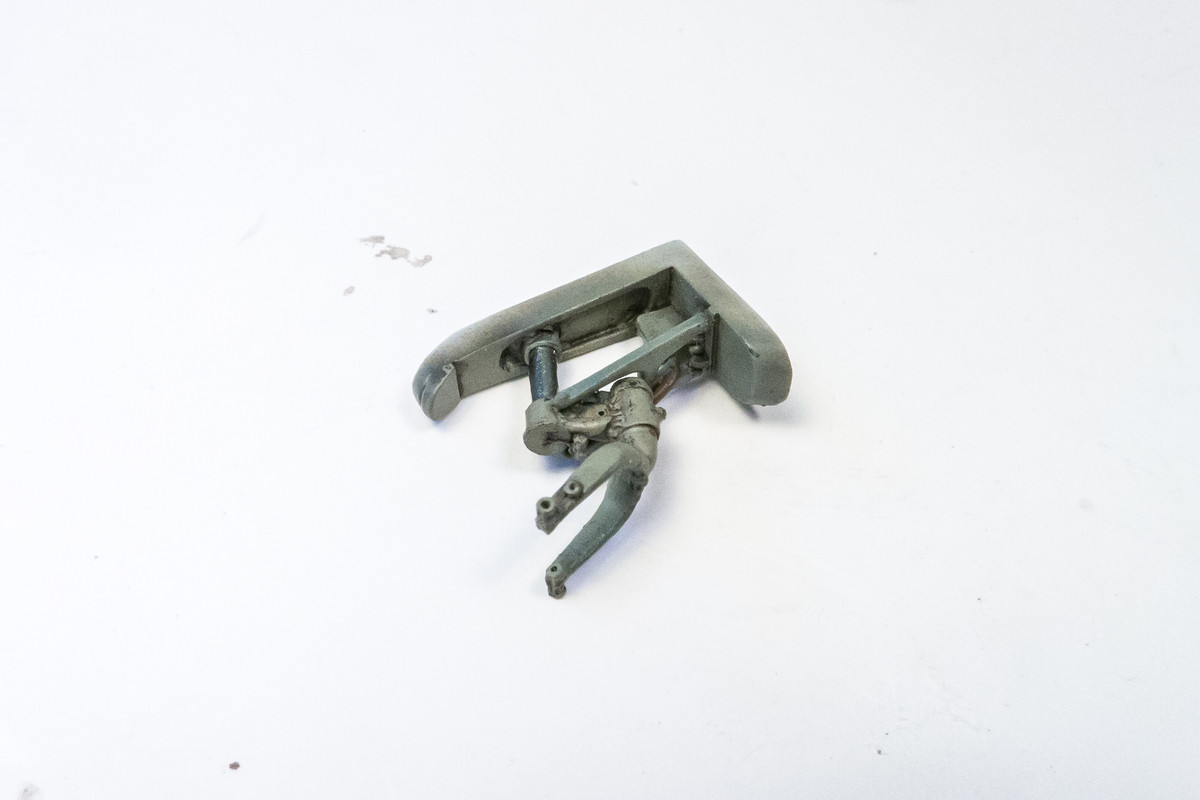
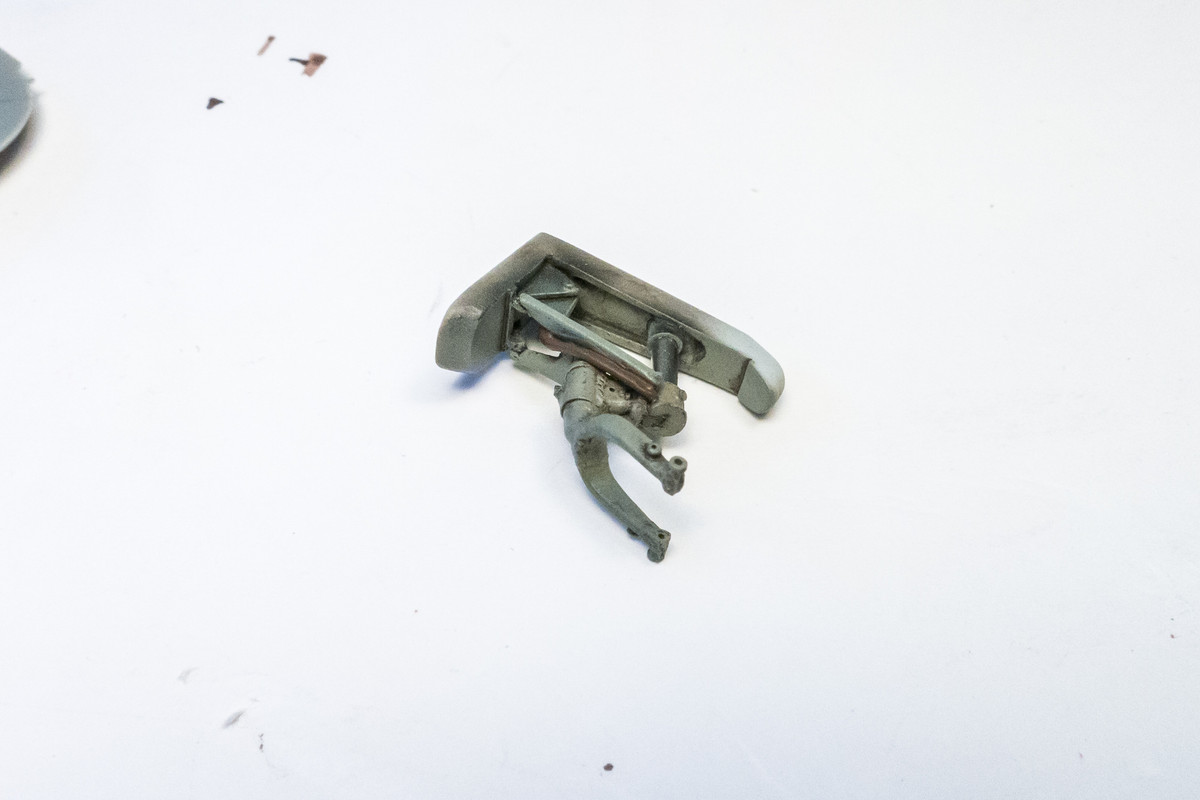
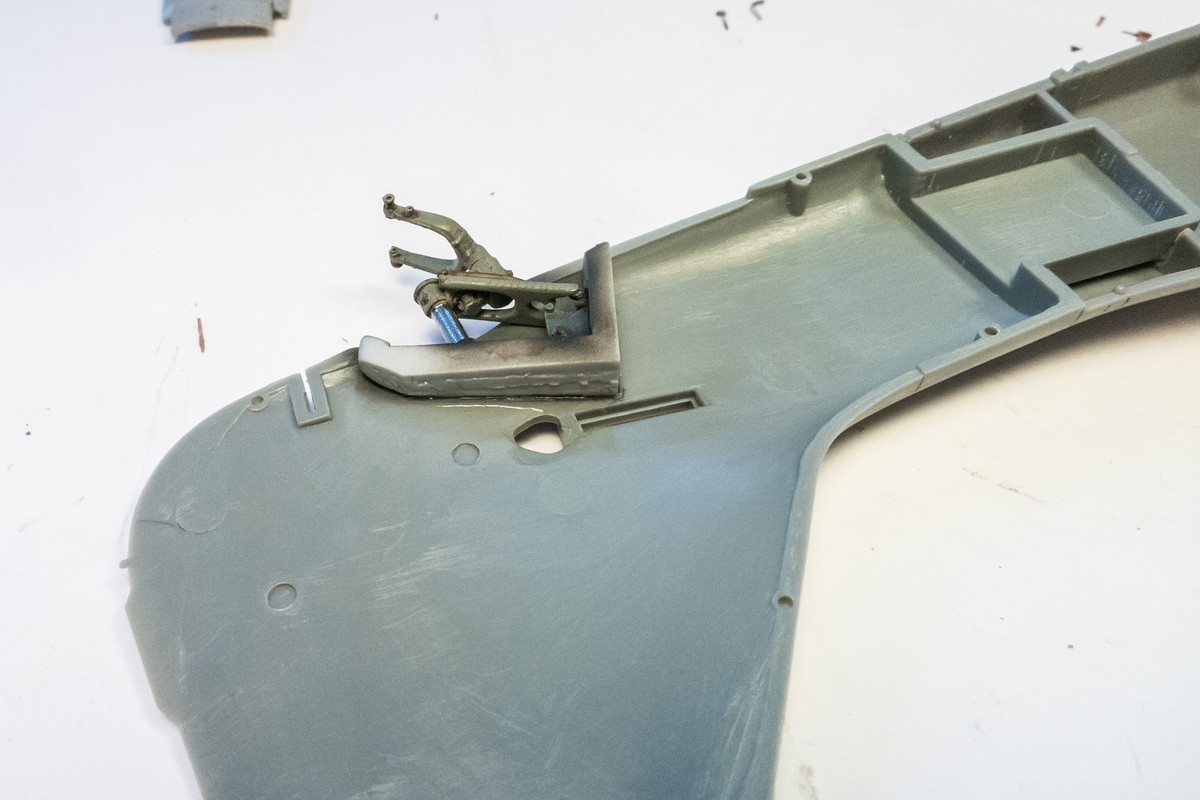
The tail wheel bay is glued into place with CA glue. The position was pre-marked with a pencil.
Before gluing the fuselage halves together, I performed one more dry fit check to make sure that the engine assembly and cockpit tub fit okay.
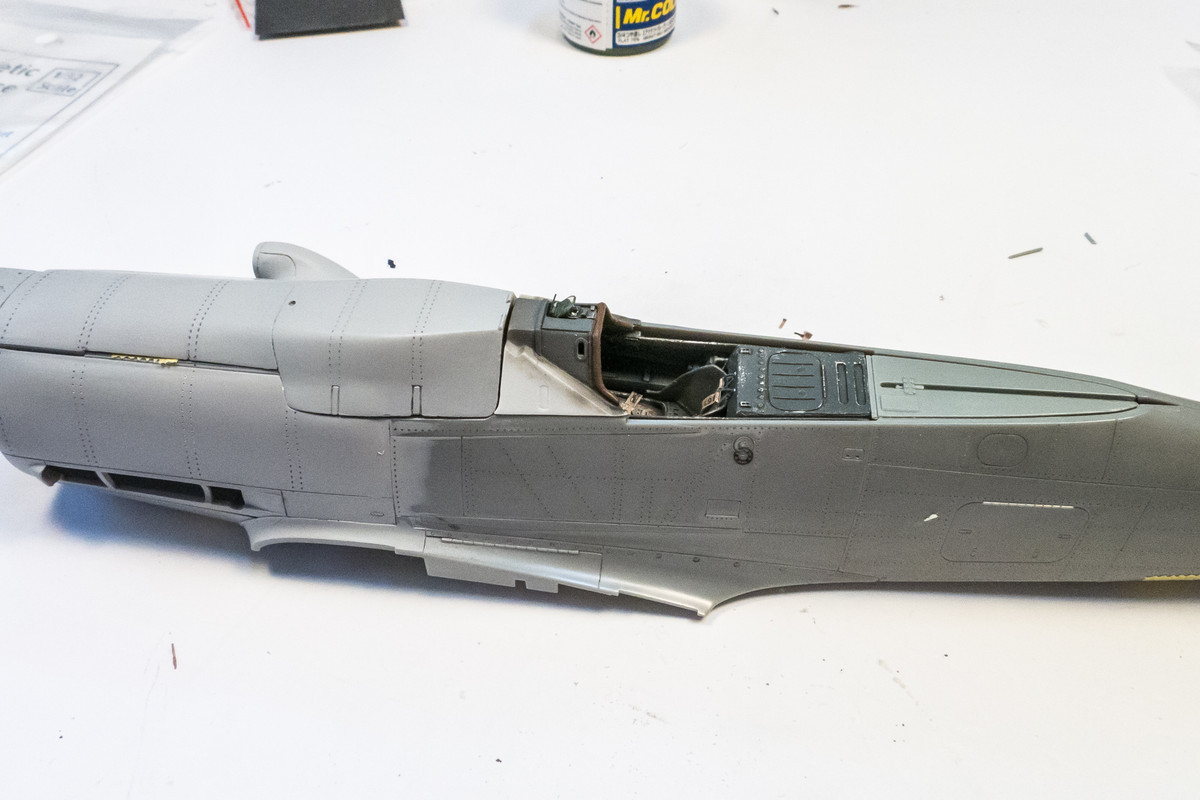
The wing was fitted into place to verify that everything goes together ok. Again, I am using the kit wheel wells since they are easier to dry fit than the Aires set, which has been cut into multiple pieces. The bottom wing center piece, which is from the Grey Matter resin D-13 conversion set, seems to fit well.
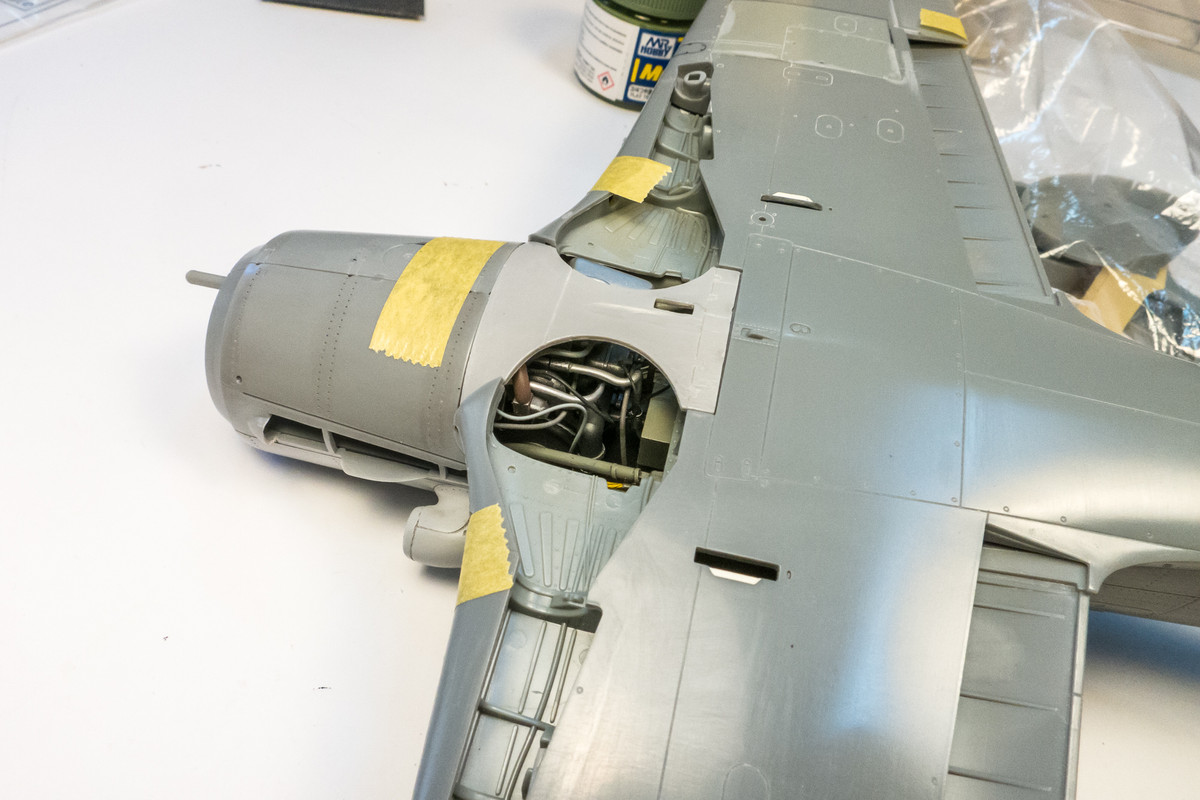
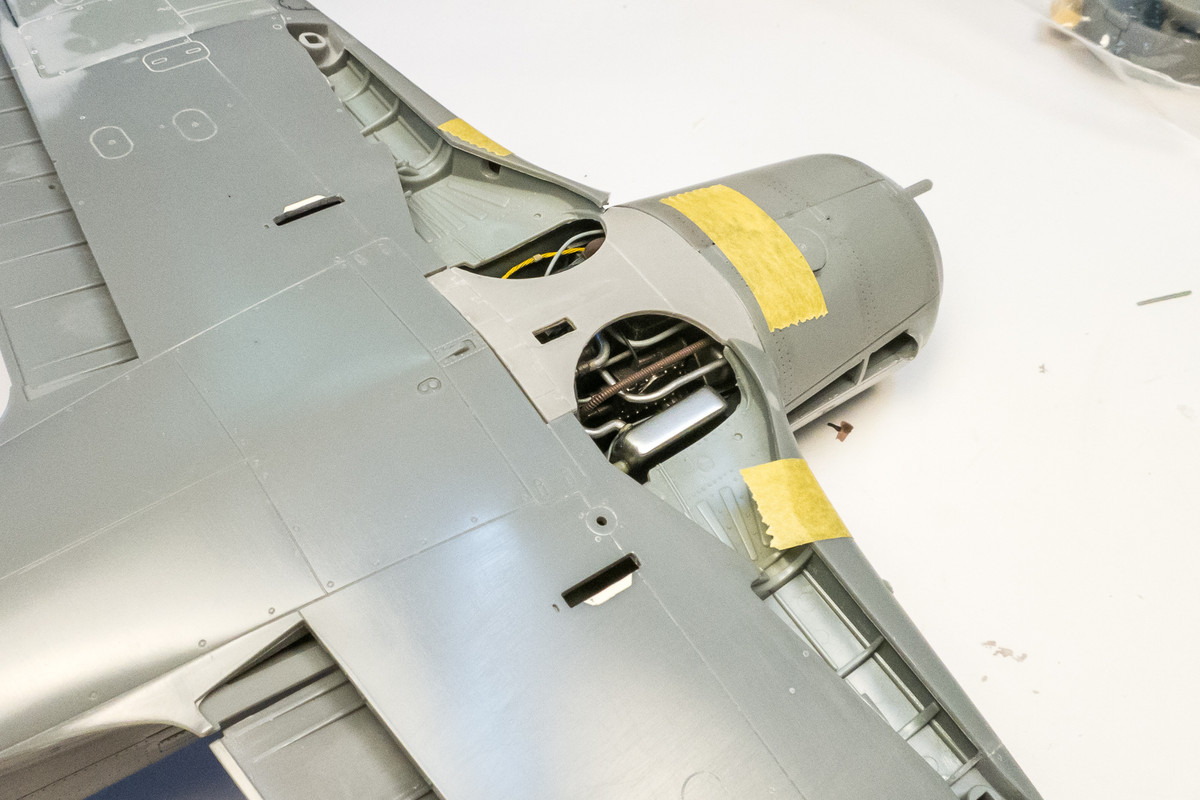
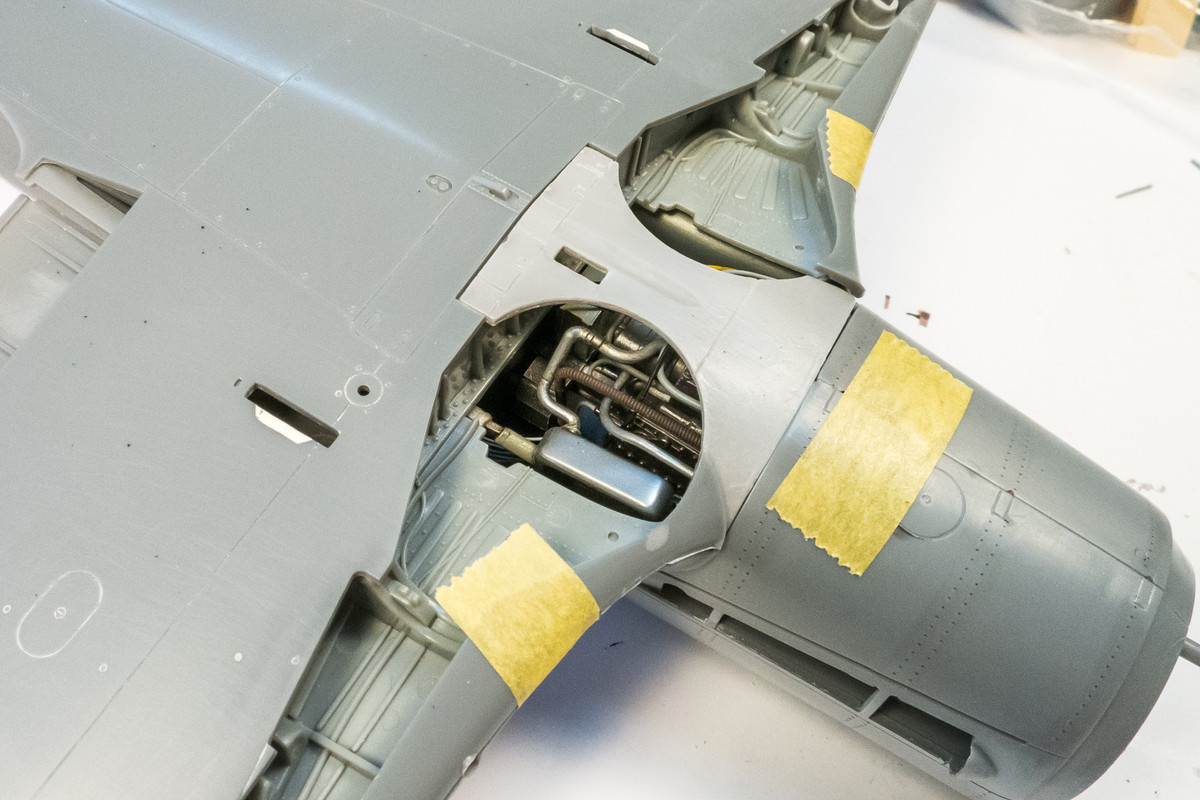
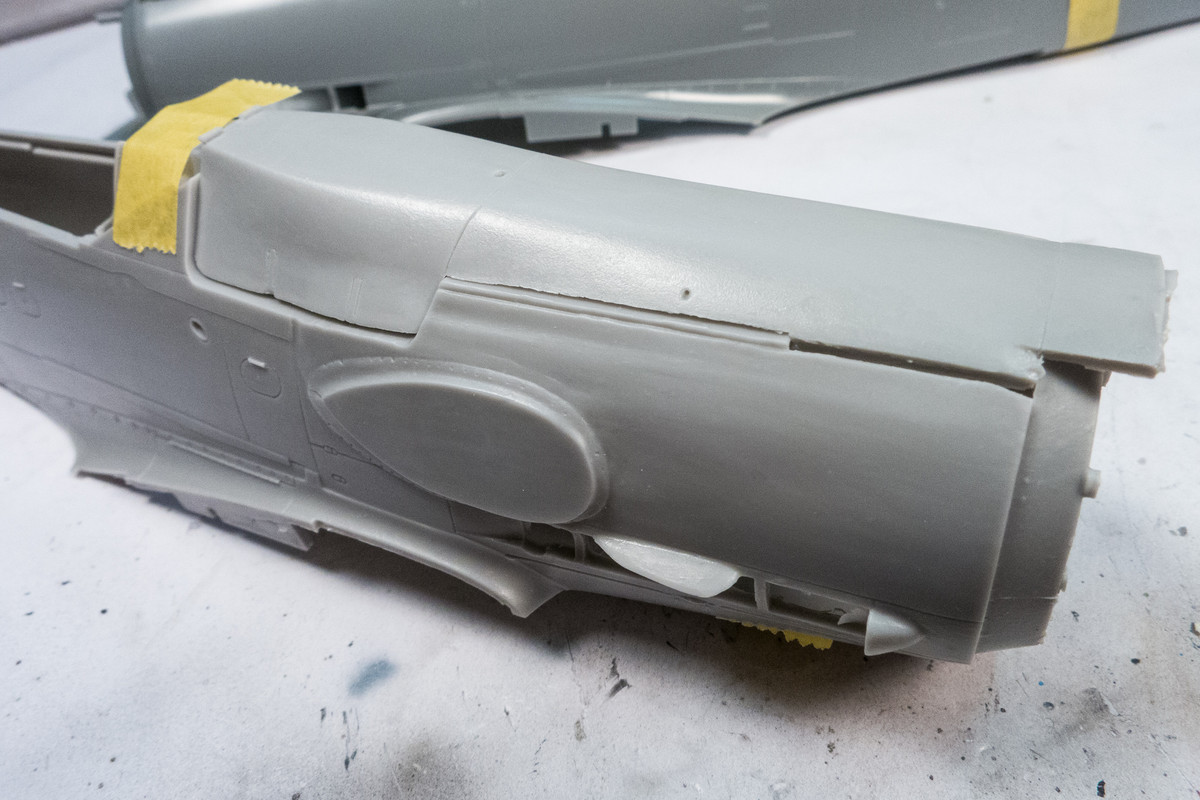
Everything checked out ok so I started to glue the fuselage halves together working from the tail and moving forward, welding sections together using Tamiya Extra Thin cement.
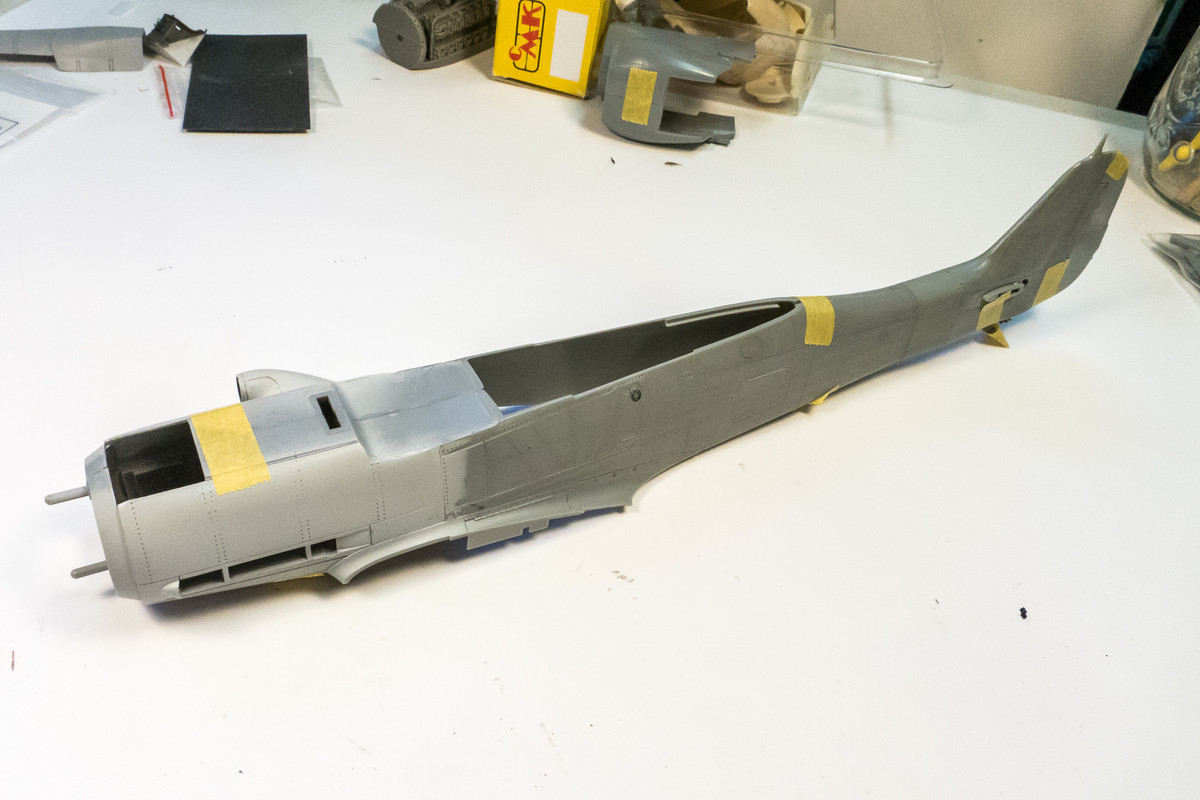
Prior to gluing the forward section of the fuselage together, I inserted the engine assembly with a bead of tube glue on the forward bulkhead where there would be a plastic-to-plastic connection.
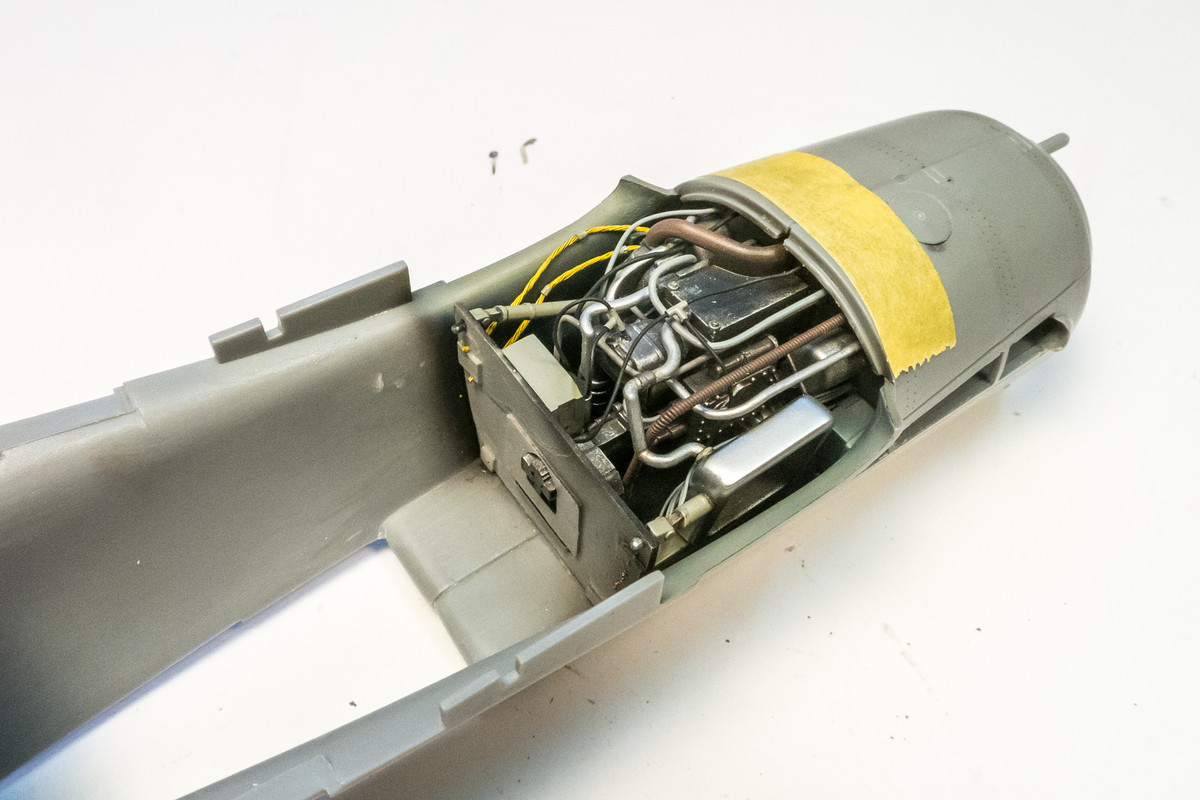
The rear bulkhead was secured to the fuselage using a bead of CA glue. You can just make out in the last two photos where the thin resin bulkhead (from the Grey Matter set) snapped off when I was pushing it into place. Luckily, the braided wire runs and the bulkhead attachment strut helped keep the broken piece in place and made it easy to repair.
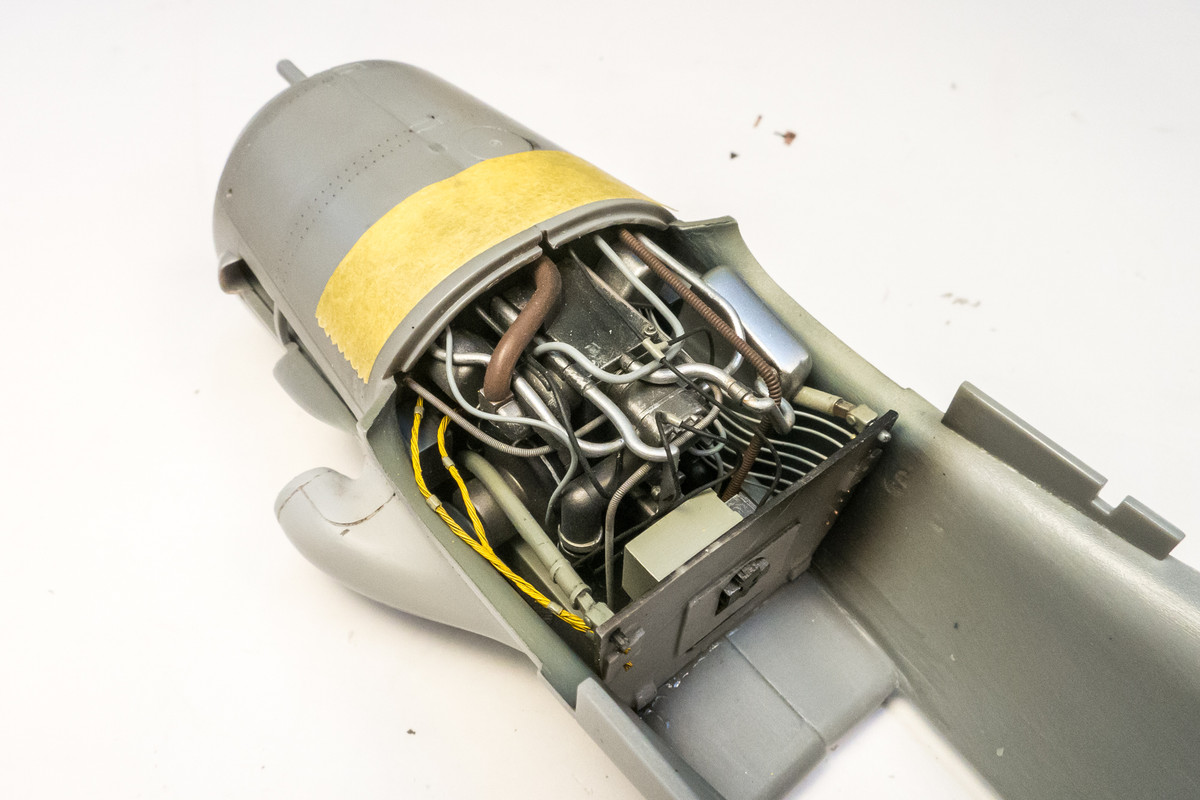
After the engine assembly was secured into place, the rest of the fuselage joints were fused using Tamiya Extra Thin cement. Placing the clear parts in position revealed a slight overhang between the windshield and sliding canopy that I'll need to keep an eye on. Yes, I riveted the frame on the sliding canopy!